
Full of wonder
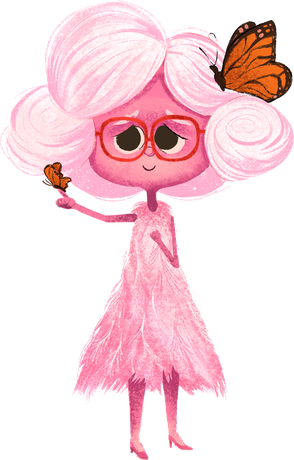
Her hair catches every breeze. She notices the small joys first.
Step into Liminal, where six friends are learning what to do with big feelings. Kids play, explore and practice the calm-down skills they’ll use for life.
Free · Grade 2 · about 10 minutes · no account needed
Every lesson follows the same gentle rhythm, so kids can find it again on their own when a big feeling shows up.
Where is the feeling in your body? Hot cheeks, a wobbly tummy, tight fists.
Find the word for it. Naming a feeling helps the brain calm down.
No pushing it away. Feelings are like waves: they rise, and they pass.
Set it on a leaf and watch it float down the river. Then choose what’s next.
When a friend in Liminal has a big feeling, your child decides what they do. Every choice is safe to try. Over time, every friend learns the move that works best: sitting with the feeling until it passes.

My curls get hot when I’m mad. What should I do?
Kids see themselves in these characters, and learn that every feeling is okay to have.
Her hair catches every breeze. She notices the small joys first.
Missing someone is a kind of love. She keeps her memories in books.

When he gets mad, his curls swirl. He’s learning to use that energy to build.
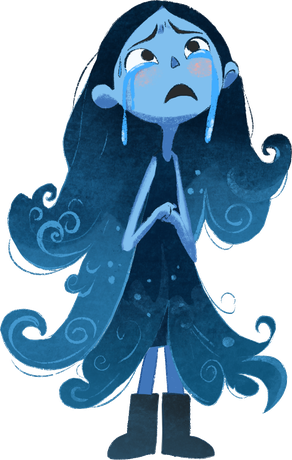
She can cry and laugh at the same time, and both feelings belong.

Sparks fly when he’s excited or nervous. He’s learning to pause first.

He peeks out from his hood when he’s worried. Brave can still feel scared.
Liminal blends neuroscience, psychology and philosophy of mind with the work of thinkers like Brené Brown, so every lesson rests on more than one idea.
Putting a feeling into words lowers activity in the brain’s alarm center.
Affect labeling, Lieberman et al., 2007
Pushing feelings down works worse than noticing and accepting them.
Emotion regulation, Gross, 1998
Kids learn they’re accepted for who they are, without changing to fit.
Brené Brown, Braving the Wilderness, 2017

Get the free Grade 2 demo and be first to hear when Liminal launches. We’ll only email you about Liminal.